Transitioning to solar energy is no longer just an environmental choice—it is a financially savvy move for Indian homeowners. This article demystifies the General information about rooftop solar power systems. It is the first article in the solar series, which is to be published here for every step, starting from types to subsidy to Net Meter Configuration.
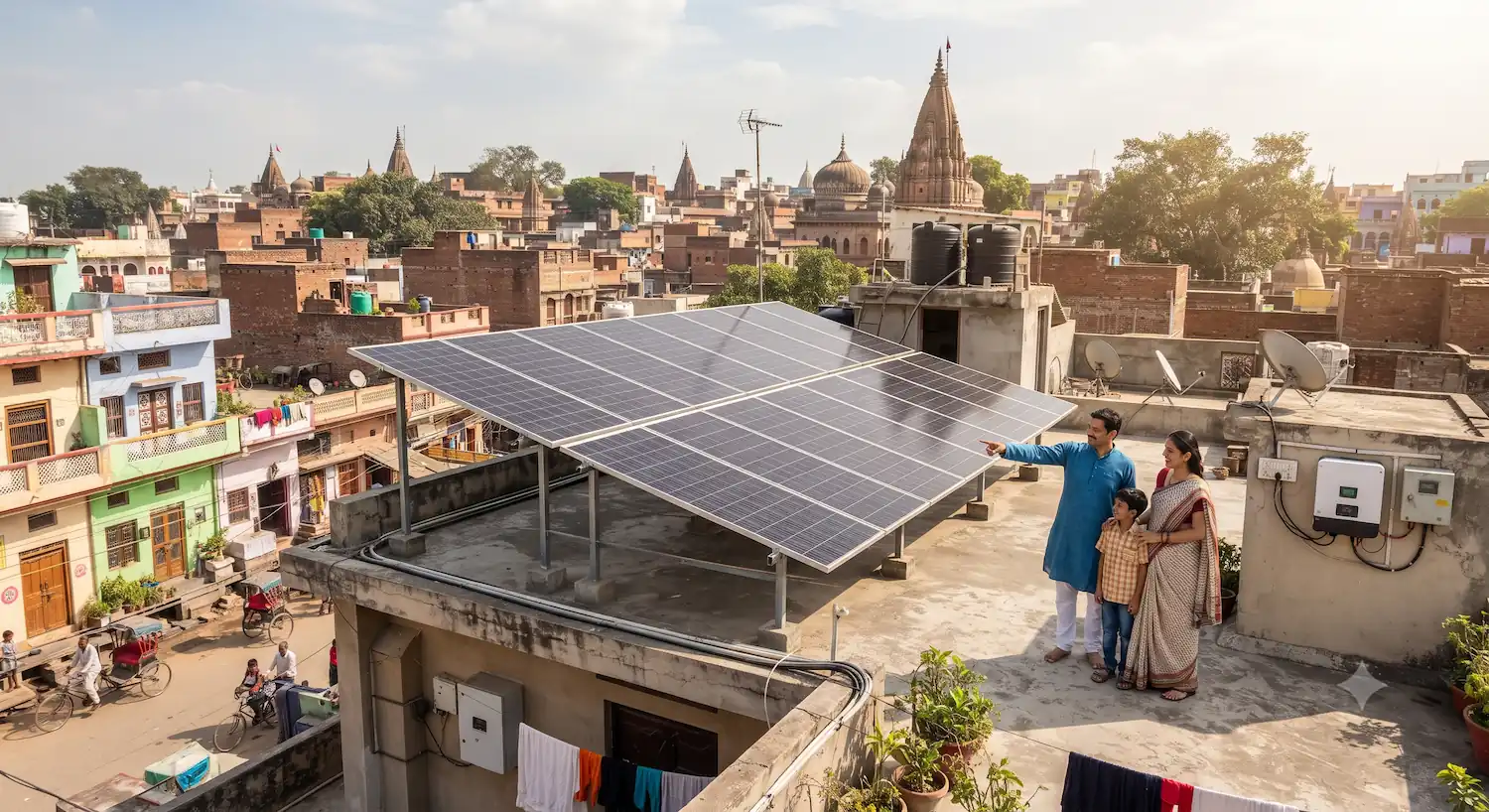
Understanding the Basics:
Before jumping into installation, it is crucial to understand how solar capacity works. Solar systems are measured in kilowatts (kW). Typically, 1 kW of solar capacity generates between 1,400 and 1,450 units of electricity annually. For an average family of three to four people, a 3 kW system is often the recommended baseline, though larger households with heavy air conditioning use may require 4 to 5 kW.
Choosing the Right System:
There are three primary types of solar systems, with on-grid systems being the most popular choice for residential properties:
On-Grid: These systems connect to the local utility grid using net metering, allowing homeowners to export excess power and draw from the grid when needed. It is the most cost-effective solution as it eliminates the need for expensive battery storage.
Off-Grid: These are independent of the grid but require battery banks, making them more suitable for areas with frequent, long-term power outages rather than standard urban homes.
Hybrid: A flexible option that combines grid connectivity with battery backup, offering the best of both worlds at a higher initial cost.
Key Components and Technology
To ensure a long-lasting and safe system, it is vital to focus on high-quality components:
Solar Panels: Mono-PERC half-cut bifacial panels are the current industry standard, offering superior efficiency and better space management.
DCDB (Direct Current Distribution Box): Installed between the solar panels and the solar inverter. It collects DC power from photovoltaic modules and routes it safely to the inverter.
Inverter: Known as the "brain" of the system, it converts DC power from the panels into usable AC electricity for your home appliances.
ACDB (Alternating Current Distribution Box): Installed between the solar inverter and your home load or the utility grid.Receives converted AC power from the inverter and distributes it safely for household use or grid export.
Mounting Structure: A robust, storm-resistant structure—preferably prefabricated—is essential for structural integrity and long-term safety.
Government Subsidy: PM Surya Ghar Muft Bijli Yojana
The PM Surya Ghar Muft Bijli Yojana has revolutionized solar adoption by providing a unified, streamlined subsidy process. For a 3 kW system, homeowners can receive a subsidy of ₹78,000, transferred directly into their bank accounts via Direct Benefit Transfer (DBT) after the system is commissioned.
ROI and Maintenance:
With the current subsidy structure and energy savings, most households can recover their entire initial investment within 4 to 5 years. While solar systems are often described as "install and forget," professional maintenance is critical. Regular deep cleaning and system health checks help prevent potential performance drops of 30–50% over time, ensuring your system remains efficient throughout its 25-year lifespan.
Have questions about this article or your electricity bill?
Post your question in our Community Q&A Forum to get verified answers from engineers and consumers.
Ask in the Community Forum →
💬 Reader Discussion 0 comments
Share your thoughts, questions, or field experiencesNo comments yet
Be the first to share your thoughts, clarification, or question regarding this article!